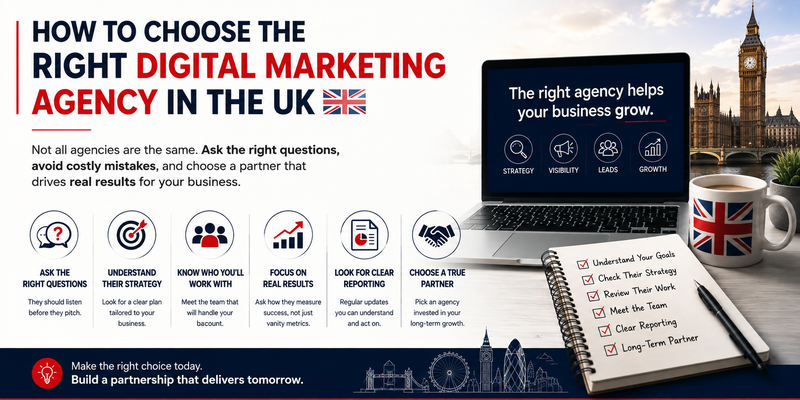
Choosing a digital marketing agency is easier than ever. Choosing the right one is a different story. Search for agencies online and you’ll find hundreds of websites making similar promises. They all talk about increasing traffic, generating leads, improving rankings, and helping businesses grow. On the surface, it can feel like every agency offers the same thing, making the decision even harder.
The reality is that a successful agency relationship isn’t built on impressive presentations or polished proposals. It’s built on trust, clear thinking, and a genuine understanding of what your business is trying to achieve. If you’re looking for a digital marketing agency, here’s what deserves your attention before you make a decision.
Marketing agencies know how to market themselves. That’s their job. A polished website, well-designed proposal, and confident presentation can leave a great first impression, but they don’t tell you what happens after the project begins. Instead of focusing on how an agency presents itself, pay attention to the questions it asks.
The first conversation should feel like a discussion, not a presentation. If an agency spends more time talking than listening, there’s a good chance they’re recommending a solution before fully understanding the problem.
Imagine visiting a doctor who prescribes medication before asking about your symptoms. It wouldn’t inspire much confidence. Yet many businesses experience something similar when speaking with marketing agencies. Within minutes, they’re told they need SEO, paid advertising, social media management, content marketing, and a website redesign.
Sometimes those recommendations are valid. Often, they’re simply part of a standard package. No two businesses have the same audience, competition, budget, or objectives. A local law firm, an online clothing retailer, and a construction company will each need a different approach.
A good agency explains why it recommends certain activities and just as importantly, why others can wait.
Most agencies can show impressive graphs.
Those numbers matter, but they don’t tell you how those results were achieved. Instead of asking for success stories alone, ask them to explain the decisions behind a campaign.
Experienced marketers know that campaigns rarely go exactly as planned. Markets shift, customer behaviour changes, and ideas that looked promising on paper sometimes fail in practice.
An agency that can openly discuss those moments is usually more valuable than one that only talks about perfect outcomes.
It’s surprisingly common for businesses to build a relationship with a salesperson, only to be handed over to an entirely different team once the agreement is signed. That doesn’t automatically mean something is wrong, but it’s worth understanding how the agency operates.
Knowing who’s responsible helps you understand how the agency works day to day and avoids surprises later.
Many businesses receive monthly reports filled with colourful charts, percentages, and technical terminology. The question is whether those reports help you make better business decisions. A useful report shouldn’t leave you wondering what happened over the last month.
It should answer simple questions.
If you need another meeting just to understand the report, it’s probably more complicated than it needs to be.
Every business has a budget, and it’s natural to compare prices before making a decision. But marketing isn’t like buying office supplies where the cheapest option often does the same job.
A lower monthly fee might mean less research, fewer hours dedicated to your account, or a strategy that’s copied from one client to the next. On the other hand, the most expensive agency isn’t automatically the best either.
Rather than asking, “Which agency costs less?”, ask, “What am I actually getting for this investment?” The answer usually tells you far more than the number at the bottom of the proposal.
The first meeting isn’t just an opportunity for an agency to assess your business. It’s your opportunity to assess them.
Ask questions that go beyond pricing and services.
There isn’t a perfect answer to these questions. What matters is whether the agency explains its thinking clearly instead of relying on rehearsed responses.
Digital marketing isn’t predictable enough for guarantees. Search engines update their algorithms, competitors change their approach, and customer behaviour shifts throughout the year. Anyone promising first-page rankings or a fixed number of leads is making promises they can’t fully control.
A more honest conversation may not sound as exciting, but it’s usually a sign that the agency is setting realistic expectations rather than trying to win your business at any cost.
You don’t necessarily need an agency that’s based in your city, but working with one that understands the UK market can make a real difference.
Search habits, buying behaviour, seasonal demand, and even the language people use can vary between countries. A campaign written for an American audience won’t always resonate with customers in Manchester, Birmingham, or Glasgow.
That’s why local context matters. It helps shape content, advertising, and messaging that feels familiar to the people you’re trying to reach.
One of the biggest misconceptions is that the customer is always right when it comes to marketing. Sometimes the best advice you’ll receive is hearing that your original idea isn’t the strongest option. A good agency isn’t there to agree with everything you say. It’s there to explain why a different approach could produce a better outcome.
If every suggestion is met with an immediate “yes,” ask yourself whether they’re offering expertise or simply avoiding a difficult conversation. The strongest agency relationships are built on honest discussions, not constant agreement.
Every business is different, so our first priority is understanding what you’re trying to achieve before recommending a service. Sometimes that means focusing on SEO, sometimes it’s paid advertising, and sometimes it’s improving the website before spending another pound on marketing.
Good advice isn’t about selling more services, it’s about helping businesses make informed decisions with confidence.
Take your time, ask thoughtful questions, and don’t be influenced by promises that sound too good to be true. The right agency won’t simply deliver a monthly report. It will help you understand what’s working, adapt when circumstances change, and give you confidence that every marketing decision has a clear purpose.
When you find an agency that works this way, you’re not just hiring a supplier. You’re choosing a team that understands where your business is today and where it has the potential to go.
How do I know if an agency is right for my business?
Pay attention to the first conversation. A good agency asks about your customers and challenges before pitching a package, rather than the other way round.
Not automatically, a lower fee can mean less time on your account or a copy-paste strategy. Ask what you’re actually getting for the money instead of comparing price alone.
No legitimate agency can guarantee this, since algorithms, competitors, and customer behaviour are outside anyone’s full control. Treat fixed promises as a warning sign.
Ask what the first 90 days would look like, who will actually manage your account, and how they adjust strategy if something isn’t performing.
Location itself matters less than whether they understand the UK market search habits and customer behaviour don’t always translate from other countries.