If you’ve ever searched for your business on Google and found a negative review, an old article, or misleading information ranking near the top, you’ll know how quickly online perception can influence real business decisions.
For most UK businesses today, your online reputation is often the first impression customers, partners, and even potential employees have of your brand. Long before someone visits your website or gets in touch, they’ve probably searched your name and formed an opinion based on what they find.
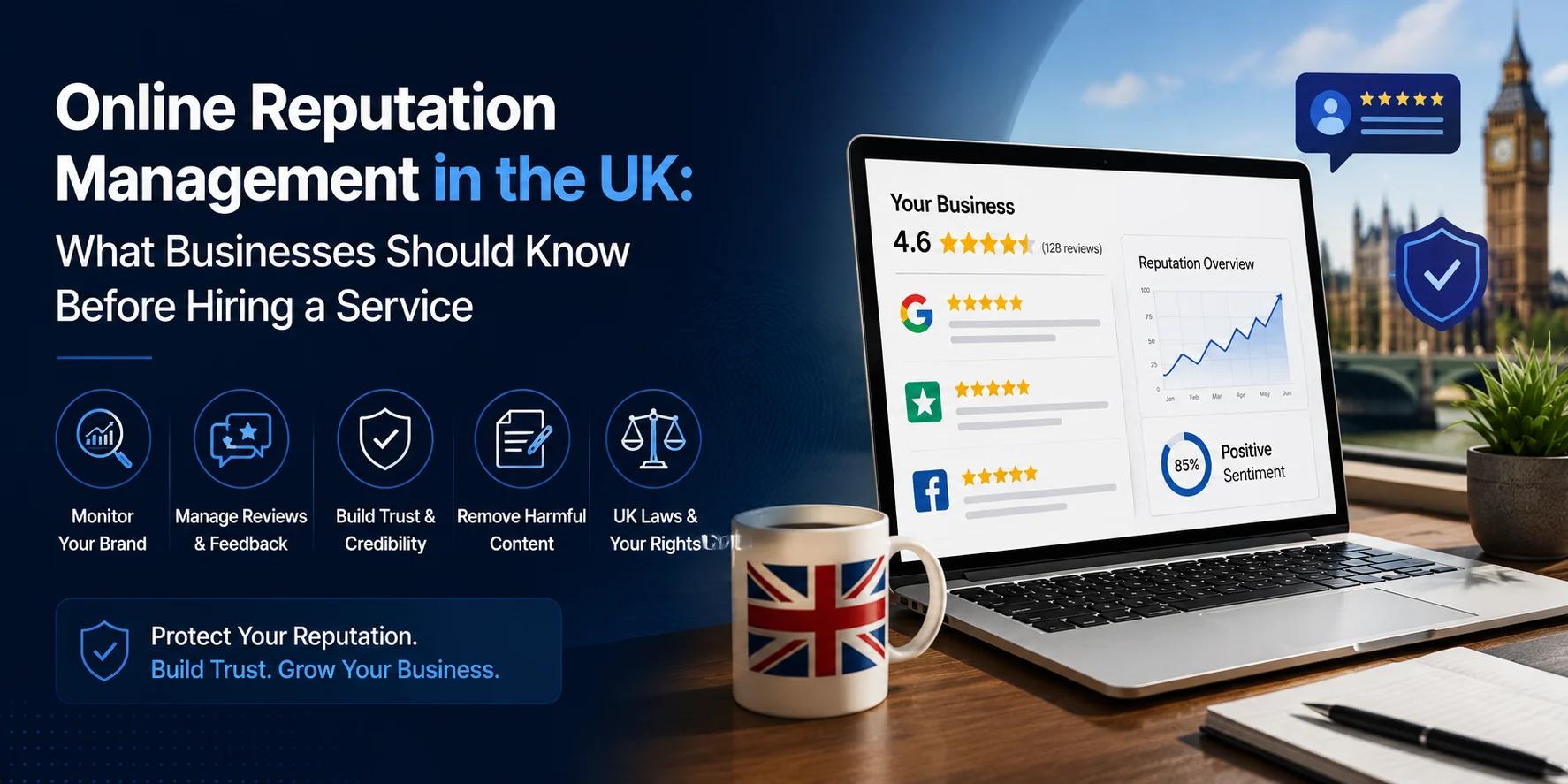
Online reputation management is the process of monitoring, improving, and protecting how your business appears online. It typically includes:
It’s important to understand what a reputable ORM isn’t. It’s not about hiding the truth or flooding the internet with fake reviews. Ethical providers focus on improving your online presence through legitimate strategies that comply with platform policies and UK law.
The way people research businesses has changed. Reviews, search results, and social media all influence buying decisions, making reputation management more valuable than ever.
Several factors have driven this shift:
Whether someone is hiring a local tradesperson or choosing a software provider, reviews often influence the final decision. Ignoring negative feedback can damage trust, even when the business itself delivers a great service.
UK defamation laws and UK GDPR provide routes for challenging harmful or inaccurate content in certain situations. However, understanding when these options apply and how to pursue them can be complicated.
A single unresolved complaint can reach a large audience within hours. Businesses that respond professionally and address concerns openly are generally viewed more favourably than those that stay silent.
Although they’re often grouped together, business and personal reputation management are different services.
Knowing which type of support you need will help you choose the right provider and avoid paying for services that don’t address your situation.
The reputation management industry isn’t heavily regulated, so choosing the right agency requires careful research.
A reliable provider should offer:
They should explain exactly how they plan to improve your online reputation, whether that’s through review management, content creation, SEO, legal requests, or a combination of approaches.
Reputation management takes time. Search results don’t change overnight, so be cautious of anyone promising immediate results.
No agency can legitimately guarantee the removal of accurate content from Google simply because it’s negative. Be wary of providers making unrealistic promises.
You should receive updates that clearly show progress, such as changes in search visibility, review ratings, sentiment, or completed actions.
Ask for examples of businesses they’ve worked with, particularly those in a similar industry or facing similar challenges.
Costs vary depending on the size of the business and the complexity of the issue. A small business looking for review monitoring and response services may pay a few hundred pounds per month.
Larger reputation recovery projects involving content creation, SEO, legal support, and continuous monitoring can cost considerably more, particularly if multiple issues need to be addressed over several months.
Extremely low pricing should be treated with caution. Effective reputation management requires ongoing work, and unusually cheap services often rely on shortcuts that produce limited long-term results.
Before signing a contract, consider asking a few important questions:
A reputable agency should be happy to answer these questions and explain its process clearly.
Your online reputation influences how people see your business before they ever speak to you. Reviews, search results, news coverage, and social media all contribute to that first impression.
Whether you’re dealing with negative reviews, inaccurate information, or simply want to build a stronger online presence, professional reputation management can help protect your brand and improve customer confidence.
The key is choosing a provider with realistic expectations, transparent methods, and a proven approach rather than one that promises quick fixes.
Weeks for review monitoring, months for recovering from a damaging article or search result. Anyone promising instant results is a red flag
Only if it breaks platform rules or is defamatory. Genuine negative reviews can’t be removed just for being negative.
No. SEO ranks for keywords; ORM controls what shows up when someone searches your name specifically.
Business ORM protects your company’s image; personal ORM protects an individual’s name in search.
A few hundred pounds a month for small business review monitoring; more for larger recovery projects. Very cheap pricing usually means shortcuts.